
Dual-Voltage Small Appliances: A Sourcing Brief for North American Private-Label Programmes
A 120/230V sourcing brief for North American private-label programmes: which toaster, coffee maker and kettle models clear the voltage gate, how to split a container, and what to confirm before samples.
Voltage is the first gate in any North American appliance programme. The Hongfair Export Zone lists several small appliances at 120/230V, 50/60Hz, while most of the kettle range is published at 220-240V. That difference decides which products can be quoted for a US or Canadian shelf as they stand, and which ones need a configuration change before anyone talks about artwork.
Here is the published specification set, then how it plays out on a retail shelf, in a foodservice kitchen and inside a private-label project.
Published voltage and power, model by model
The dual-voltage group is small and specific. Four toasters and four coffee makers are listed at 120/230V. The rest of the small-appliance range, including the full kettle catalogue, is published at 220-240V and needs its own conversation for North America.
| Model | Published voltage | Power | Notes |
|---|---|---|---|
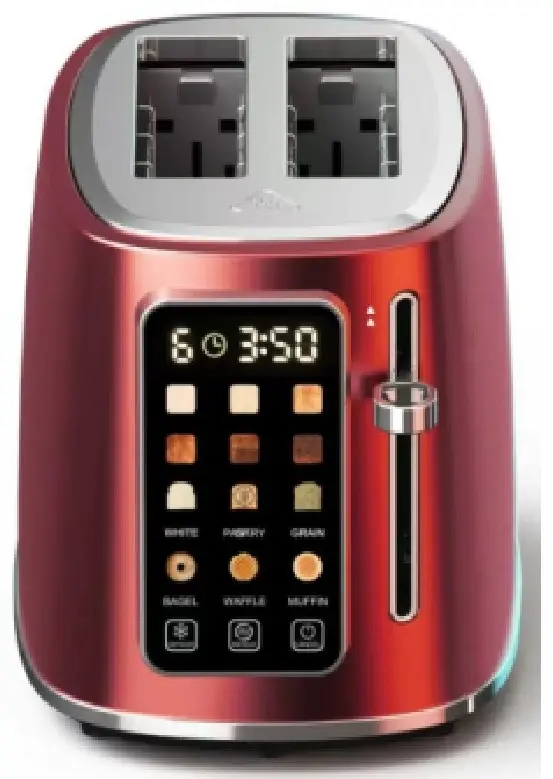
| SDT-200 | 120/230V, 50/60Hz | 700W | Two-slice stainless steel, six-level browning, digital display |
| SDT-211 | 120/230V, 50/60Hz | 700W | Two-slice stainless steel, six-level browning, display |
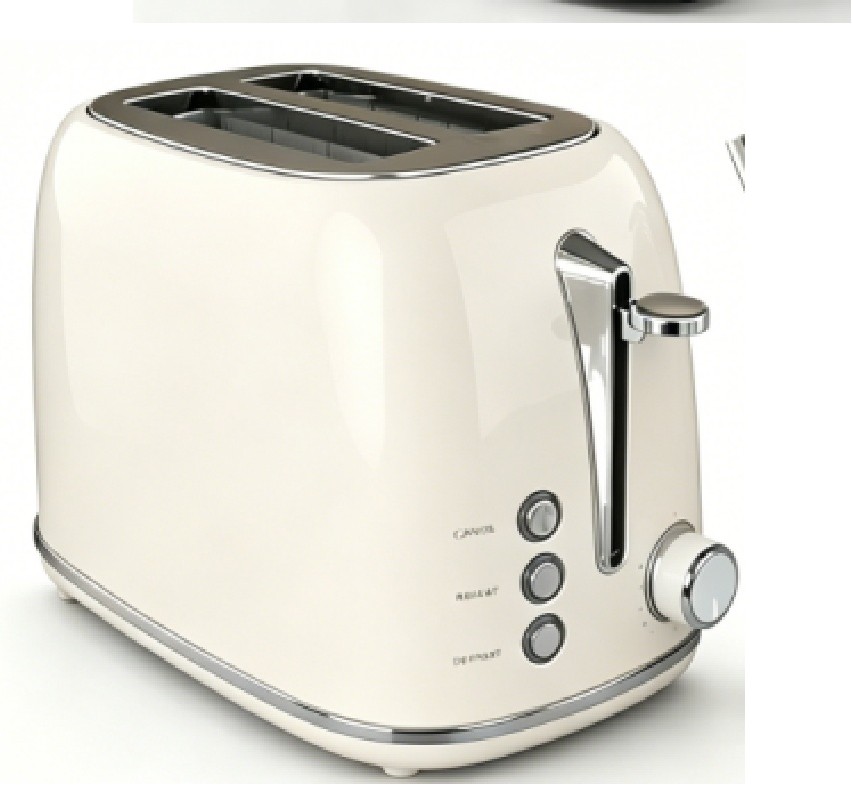
| SDT-203 | 120/230V, 50/60Hz | 700W | Plastic cool-touch housing, crumb tray |
| SDT-202 | 120/230V, 50/60Hz | 700W | Plastic cool-touch housing, crumb tray |
| SDCM-601 | 120V/230V | 900W | 1.5L, anti-drip, water-level gauge, warm plate |
| SDCM-02 | 120V/230V | 650-900W range | 1.2L, washable permanent filter |
| SDCM-09 / SDCM-09S | 120V/230V | 650W | 600ml |
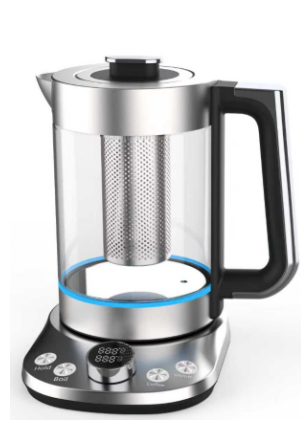
| Kettle range (digital, retro, double-wall, glass, hotel) | 220-240V | Ask export team | 120V configuration to be confirmed per model |
| SDJB blenders, including SDJB-2002 | 220-240V | 350W | 1.5L glass jar, three speeds, pulse, HC7025 pure copper motor |
Read the voltage line before anything else. A 220-240V kettle is not a 120V kettle with a different plug, and assuming equivalence is how a programme loses a season.
Retail: a three-SKU breakfast set
Retail buyers shortlist by category, not by catalogue size. Breakfast is where this range is strongest. SDT-200 and SDT-211 are two-slice stainless steel toasters with six-level browning control, a chrome knob and Cancel, Reheat, Defrost and Bagel functions. SDT-200 adds a digital display, and SDT-211 carries a display too. The stainless finish photographs well and sits comfortably next to mid-market kettles on a shelf.
For coffee, SDCM-601 brings 1.5L and 900W with an anti-drip feature, water-level gauge and warm plate. SDCM-02 is the 1.2L option with a washable permanent filter, an easy story for a buyer who wants fewer consumables. SDCM-09 and SDCM-09S are 600ml at 650W, better suited to a compact assortment than a family-size one.
Blenders round out the counter set, but the SDJB range is published at 220-240V. Those models run a 350W HC7025 pure copper motor, a 1.5L glass jar, three speeds and pulse, and SDJB-2002 adds a digital setting. For North America, treat the voltage exactly as you would the kettles and confirm the configuration first.
The kettle catalogue covers digital, retro, double-wall, glass and hotel series, all published at 220-240V. A digital kettle is often the anchor of a breakfast set, so it is worth asking early whether the model you want can be built for 120V.
Foodservice: container maths before unit price
Foodservice buyers ask different questions. Duty cycle, cleaning and spare-part access matter more than packaging, and the same toaster platform can serve both channels if the proposal is rewritten. SDT-203 and SDT-202, with plastic cool-touch housings and crumb trays, are easier to place in a commercial kitchen than the stainless display models.
Quantity planning starts with the published loading figures, because freight per unit moves more than most people expect between models.
- Toasters SDT-200 and SDT-211: 1,960 pieces per 20-foot container, 4,800 per 40-foot.
- Toaster SDT-202: 4,872 per 20-foot, 10,160 per 40-foot.
- Coffee maker SDCM-601: 1,710 per 20-foot, 4,008 per 40-foot.
- Coffee makers SDCM-09 and SDCM-09S: up to 3,800 per 20-foot, 8,816 per 40-foot.
A pilot built on one 20-foot container can carry about 1,960 toasters, or 4,872 of the compact SDT-202, or 1,710 SDCM-601 units. Mixing lines means splitting that cube, so settle the SKU ratio before you ask for a quote. The number that matters is freight per unit landed, not the FOB figure on its own.
Private label: what to settle before artwork
OEM/ODM covers logo, packaging and colour customisation. The practical sequence is to send artwork and market labelling requirements at the sample stage, not after approval, because packaging changes are cheap before tooling and expensive afterwards.
Certification belongs in the first email. The Export Zone lists ISO9001:2015, BSCI, FDA, LFGB and ISO14000:2015. North American buyers usually bring their own market requirements on top, so state them at enquiry stage and ask for the current documents and test reports for the exact models you shortlist. Finding a documentation gap after samples are approved costs a full cycle.
The cooperation flow is published as requirements, samples, contract, production and delivery. A tight pilot with three models tells you more than a broad first order. Pick one toaster, one coffee maker and either a blender or a kettle configuration, then request samples against your market specification.
Hongfair Group Co., Ltd. (Shenzhen Hongfair Household Products Co., Ltd.) has more than 30 years of cookware manufacturing experience and supplies OEM/ODM programmes worldwide. Its in-house factory runs 2,500-ton presses and Industry 4.0 lines.
Trade enquiries: Tel / WhatsApp +86 181 3885 8168, email hongfair@vip.163.com, or write to Room 910, Unit A, Block 2, Zhongliang Xiangyun Plaza, Longcheng Street, Longgang District, Shenzhen, China. The export team can send the dual-voltage sheet, the current qualification pack and the 120V configuration list for the kettle range. Product pages are at /export.html.
Three questions to ask first
Before a shortlist goes anywhere, three answers decide the rest of the programme.
- Which models can actually be configured for 120V for my market, and which kettles can be reworked from the 220-240V catalogue?
- Which certification route and test reports apply to the destination, and can the current documents be shared for the exact models?
- Is this a retail or a foodservice programme, which sets packaging and feature depth against duty cycle and spare-part access?
Get clear answers on those three and the rest of the brief falls into place, from model mix to the first pilot container.